When Does Ramadan Begin?
"As for the fast of the heart, it is the most intense of all, for it is the locus of intention."

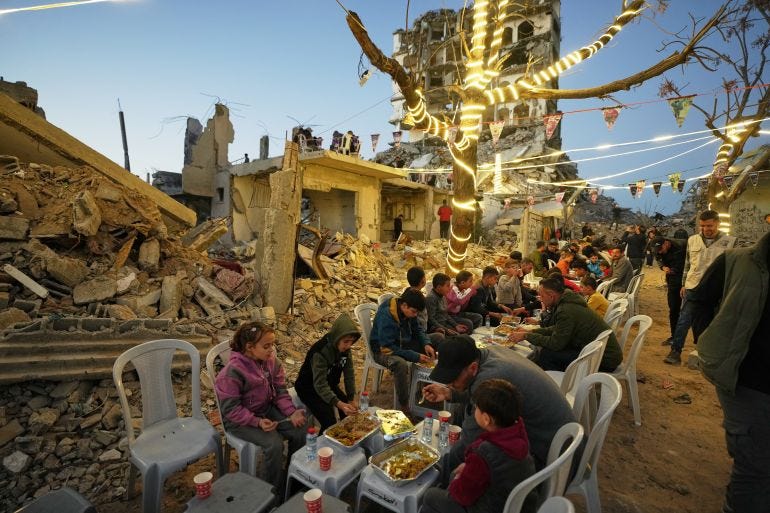
This same question is asked every year.
The answer is of course: when the month of Sha‘ban ends and the crescent of the month of Ramadan is sighted.
But this is only a surface answer, much like asking where the direction of the qibla is, and someone points you, for example, toward the east.
The qibla of the heart, however, is for Allah to be present with Him at every time and in every place. Then all your directions become blessed, and you sense the breath of the noble verse: “So wherever you turn, there is the Face of Allah.”
I return to the first question: when does Ramadan begin?
I say to you: it begins from the very first moment you give Allah all of yourself.
If Ramadan arrives while you feel lacking in preparation, then Ramadan has begun only on the surface of the astronomical calendar.
Meanwhile, your spiritual calendar has not yet entered it—and this is the key point.
Ramadan is often associated with lanterns, illuminated decorations, adorned dining tables, and varieties of sweets.
Yet in Gaza we lived through two Ramadans without any of those outward trappings, and so Ramadan manifested more clearly for us in its true spiritual meaning and essence.
What meaning is there in decorating your ceiling and your table while your heart is filled with rancor and malice, and your soul is unable to taste nearness to God? What meaning is in that while you remain troubled by your inability to set your intention purely for God in all your words and deeds?
The month of Ramadan is a message of love from Allah to His believing servants. God is independent of our acts of worship, our fasting, and our prayers; it is we who are in need of Him. Yet it is as though He says to His servant: “Come closer, for I have missed you.”
This is how I understand Ramadan, and this is how I feel it.
In reflecting on the true nature of fasting, I always recall this beautiful verse: “If you see any human being, say: ‘I have vowed a fast to the Most Merciful.’”
Here, fasting is made to mean refraining from speech as a defense of herself—not, God forbid, abstaining from backbiting or slips of the tongue. Allah did not say “silence” but said “fasting,” as if abstaining from speech for the sake of God is itself a fast.
Thus, every outward or inward movement through which the meaning of fasting is realized becomes part of it. True fasting begins from the inside outward—from the soul to the body: words are tied to the soul, and food is tied to the body.
If I wish to reflect further on the nature of fasting, there is a fast of the eyes, when they do not look at what is forbidden; a fast of the ears, when they do not listen to gatherings of backbiting or other things God has forbidden; a fast of the nose, when it does not take pleasure in scents that arouse desire outside what God has permitted; a fast of the skin, when it does not touch what God has forbidden; a fast of the steps, when one does not walk the paths of Satan; a fast of the hand, when it does not give in ostentation nor spread corruption on earth; a fast of the stomach, when it does not consume what is unlawful; and a fast of the lips, when they speak only what pleases God and refrain from what angers Him—and so on.
As for the fast of the heart, it is the most intense of all, for it is the locus of intention.
The fast of intention is its abstention from every inward or outward act that is not for the sake of God so that it is not touched by ill suspicion, nor does envy sit enthroned within it, along with the many psychological maladies that take the heart as their dwelling.
The fasting of the body from food is a lower degree than all that has been mentioned; the fast of the heart is the highest rank, and the fast of the body the lowest. Why? Because bodily fasting from food is a single, isolated state— even animals are capable of it, and may even surpass human beings in it. The clearest example is the camel, which can fast continuously from food for 11 to 17 days.
Fasting, however, is a gift from Allah for reflection upon its reality. Through it, the believer can taste this beautiful harmony between soul and body. Just as eating food nullifies the fast during the daytime of Ramadan, so too does every outward and inward bad behavior corrupt the soul.
May you be well every year.
And may God’s blessings be upon our master Muhammad ibn ‘Abd Allah—the radiant lamp, the guiding leader—by whom every difficult matter becomes easy by the permission of the Mighty, the All-Powerful; and upon his family and his companions.
this was soul-enriching and beautifully written. thank you for this deep reflection. jazākallāhu khayran. āmeen
رمادان مبروك Dr Alaa. I am always impressed by the sincerity and devotion shown by observant Islamic people, especially during Ramadan. Please accept my sincere apologies if I have mis-spelled the name of the holy month. Peace and blessings to all Palestinians: know that the world stands with you and wants to see justice for Palestine.